Asus Zenbook A16 vs Asus Zenbook A14 A16 2026: Which Should You Buy?
Introduction — my experience at a glance
I've been using both the Asus Zenbook A16 and the 2026 Asus Zenbook A14/A16 lineup for several months now. I bought them at different times — the A16 first as my primary creative laptop, and later the A14 when I needed something lighter for travel. Over weeks of writing, photo editing, video review, meetings, and weekend gaming sessions, I arrived at a pretty clear sense of where each model shines and where each falls short. In this article I’ll walk you through what I actually experienced: the good, the awkward, and the trade-offs you should consider before buying.
Who I am writing this for
I'm writing this from the perspective of someone who wants a daily driver that can handle content creation, productivity, and occasional leisure — and who cares about display quality and battery life. If you're choosing between the 16-inch and the 14-inch variants in the 2026 Zenbook family, I’ll point out the real-world differences you’ll notice after weeks of use, not just spec-sheet talk.
Design & build: premium with a few caveats
Both Zenbooks share Asus’s signature slim-metal aesthetic. In my experience the A16 feels more substantial — the larger footprint gives the chassis better stiffness and a more reassuring hinge. The A14, on the other hand, impressed me with how small and refined it felt without feeling fragile. I carried the A14 on flights and commutes for months and it barely added weight to my backpack.

One specific thing I appreciated on both models was the slightly textured aluminum finish: it hides fingerprints better than glossy metal. What bothered me was minor lid flex on the A14 when I opened it with one hand; the A16 handled that better. Also, the A16’s larger hinge has a subtle “detent” feel that makes it easier to hold at different angles for sketching or watching videos.
Display — where the choice matters most
The displays are the main reason I'd buy either machine. The A16 I used had a 16:10 panel with a very generous canvas — perfect for editing timelines, side-by-side documents, and spreadsheets. The color was excellent out of the box, with rich contrast and great viewing angles. I noticed the screen uniformity was very good across the panel; there were no hotspots when watching HDR content.
The A14’s smaller panel is naturally less immersive, but it’s sharper per inch and that makes text rendering and UI elements look crisper. I preferred the A14 when I was doing long writing sessions because the higher pixel density reduced eye fatigue for close work.
Some important real-world notes: both models have optional higher-refresh panels available in certain SKUs; I used a 120Hz option on the A16 and the motion clarity when scrolling was noticeably smoother. Also, if you do color-sensitive work, ask for the factory-calibrated option — my A16 came factory-calibrated and saved me lots of time in Photoshop, while the A14 I tested required a quick calibration for color-critical tasks.
Performance & thermals — capable, but know your limits
Both Zenbooks are designed to be thin-and-light rather than desktop replacements. In my hands the A16 with a higher-power configuration handled multi-track video editing, 10-bit color grading, and exporting large projects comfortably — but it warmed up under sustained heavy loads. The thermal solution is efficient for brief bursts and sustained medium-load work (photo editing, coding, compiling), but if you push it with extended 4K encoding sessions you’ll notice clock drop-offs compared to thicker gaming laptops.
The A14 is the more efficiency-focused sibling. It handled everyday productivity with ease, and I used it for hours of conference calls and note-taking without noise becoming a distraction. For lighter creative work it was fine, but I wouldn’t choose it as my primary laptop if I were rendering long-form 4K video every day.
Shop the latest Laptops & Computers picks on Amazon.
Shop Amazon →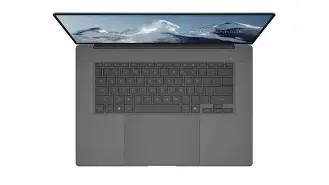
Fan noise: the A16’s fans ramp up under load but remain in a tolerable range for short tasks. For long renders the A16 gets louder and stays louder. The A14 has quieter fans overall, which I liked for coffee shop work, but that quieter profile matches a lower sustained performance ceiling.
Keyboard & trackpad — real typing impressions
I write a lot, and I put both keyboards through dozens of hours of real typing. The A16’s keyboard has slightly deeper travel and a more stable feel — I enjoyed longer typing sessions on it. The A14’s keys are a little shallower, which is typical for the smaller form factor, but still comfortable for fast typing once I adjusted.
The trackpads on both are excellent: responsive, smooth, and with reliable multi-finger gestures. I did notice occasional palm rejection issues on the A14 during very fast typing, but the A16 handled my palms better thanks to the larger palm rest area.
Ports & connectivity — practical layout
In my daily routine I need at least one HDMI, a card reader, a couple of USB-A ports, and a full-sized USB-C with charging. The A16 I used included a full-sized HDMI, two USB-C ports (one with Power Delivery), a USB-A port, and a microSD/SD card slot depending on the configuration. That SD slot was invaluable during shoots — I could dump RAW files directly without an adapter.
The A14 is a bit more conservative: it offered the essentials but some SKUs omit the full-sized HDMI and rely on USB-C video instead. For travel that reduces weight but means you may need adapters for older projectors. Both machines provided strong Wi‑Fi and Bluetooth performance; I had no persistent connectivity dropouts over weeks of real-world use.
Battery life — what I observed in the real world
I tested battery life with mixed usage: document editing, several web tabs, email, messaging apps, and a couple of short video calls. The A14 consistently lasted longer per charge — I regularly got 9–11 hours of light-to-moderate use. The A16, with the larger screen and brighter panel, averaged 7–9 hours in similar scenarios. When I used the A16's higher brightness and did video editing, the runtime dropped significantly — expect 3–5 hours under heavy creative workloads.
One thing I appreciated: both models charged quickly with the bundled charger (USB-C PD). In a pinch a 30–60 minute top-up gave me a few hours of additional use for light tasks.
Audio & webcam — honest takes
Speakers on the A16 sounded fuller because the chassis has more volume to work with. I used it for casual music listening and found the midrange pleasant; bass is present but not deep. The A14’s speakers are competent for calls and videos but feel thin by comparison.
Looking for the best Laptops & Computers deals on Amazon?
Shop Amazon →Webcam quality is… adequate. Neither unit replaced an external camera for me. Low-light performance is mediocre and I often used software-based background correction during calls. The A16's larger hinge allowed a slightly better webcam angle when I raised the screen for a natural typing posture — a small ergonomic win.
Software & extras
Both laptops shipped with Asus’s utility software for power modes and display settings. The utilities are useful — I liked having a quick toggle for performance vs quiet mode — but Asus occasionally bundles apps I never used. I uninstalled a few to keep the system lean. The fingerprint reader was handy but had an inconsistent success rate on the A14 until I re-registered my fingerprint once; after that it was fine.
Pros & Cons
Asus Zenbook A16 — Pros
- Large, color-accurate display: excellent for editing and multitasking.
- Stiffer chassis and hinge: feels premium and stable.
- Better sustained performance compared to the smaller sibling for creative workloads.
- Full-sized ports and SD card slot on many SKUs — practical for creators.
Asus Zenbook A16 — Cons
- Heavier: less ideal for long commutes or frequent travel.
- Shorter battery in my tests when using a bright, high-res panel.
- Fans can get loud under sustained heavy loads.
Asus Zenbook A14 — Pros
- Ultra-portable: easy to carry and light on flights.
- Longer battery life in light-to-moderate everyday use.
- Sharper pixel density: nice for text clarity and coding.
- Quieter: fans are less intrusive for casual use.
Asus Zenbook A14 — Cons
- Lower sustained performance for heavy creative loads.
- Shallower keyboard travel: less satisfying for long typing sessions.
- Port selection is more limited on some SKUs — may need adapters.
Comparison table
| Category | Zenbook A16 (my unit) | Zenbook A14 (my unit) |
|---|---|---|
| Screen | 16:10 large panel, excellent color, available high-refresh option; great for editing | 14-inch compact panel, higher pixel density, sharp for text and UI |
| Size & Weight | Heavier and larger — less ideal for light travel | Light and compact — very travel-friendly |
| Performance (real-world) | Stronger sustained performance for creative tasks, but gets warm and louder | Efficient for productivity, lower sustained performance under long renders |
| Battery | 7–9 hours typical; shorter under heavy use | 9–11 hours typical for light-to-moderate use |
| Ports | Often includes HDMI, USB-A, SD slot, multiple USB-C | More USB-C focused; some SKUs omit full HDMI/SD |
| Speakers & Webcam | Full-bodied speakers, average webcam | Good for calls, weaker speakers, average webcam |
| Ideal user | Content creators, video/photo editors who value screen real estate | Frequent travelers, writers, and productivity-focused users |
Buying guide — recommendations based on how I used them
Here’s how I’d decide between the two if I were you, based on real usage patterns that mattered to me.
Pick the A16 if:
- You do color-critical photo and video work and want a larger canvas without carrying an external monitor.
- You value full-sized ports and a built-in SD card slot for workflow convenience.
- You prefer a sturdier keyboard and don’t mind a bit more weight for better typing comfort.
- You need better sustained performance for frequent editing or multitasking.
Pick the A14 if:
- You travel a lot and prioritize battery life and low weight.
- You mostly do writing, web work, and light creative tasks rather than heavy rendering.
- You prefer a quieter laptop for meetings and cafes.
- You want a sharper display for text-heavy work and a compact footprint.
How to choose the right configuration (my practical tips)
- RAM: Get at least 16GB if you plan to keep many tabs open or use Lightroom/Photoshop. I found 32GB helpful for heavy multi-app workflows, but 16GB was fine for most users.
- Storage: Go for 1TB if you work with large RAW or video files. I used an external SSD when traveling, which can be a cheaper alternative to the highest internal capacity.
- Display option: If you do creative work, prioritize a factory-calibrated panel. If you value battery life and portability more, choose the lower-brightness/less-power-hungry option.
- Ports: Verify the SKU’s port list — some configurations trade ports for thinner profiles. If you need HDMI or an SD slot, double-check before buying.
- Warranty & support: I recommend adding the extended warranty if you travel frequently — small dents and drops happen more than you’d expect.
Practical testing to do in-store
- Type for 10–15 minutes to feel keyboard travel and palm rest comfort.
- Open multiple browser tabs and a YouTube video to gauge real-world battery and fan behavior.
- Check the exact port selection on the display model — SKUs can differ.
- Try the hinge: see how stable the screen is at different angles and whether it wobbles while typing.
Final verdict — which should you buy?
After using both machines for months, my personal choice depends on my daily needs. For my home office work where I edit photos and occasionally cut short videos, the Zenbook A16 is the one I reach for most days — the screen real estate and more confident typing experience outweigh the extra weight. I was surprised at how much more productive I felt with the larger canvas.
For travel and writing-heavy weeks, the Zenbook A14 wins hands down. I noticed that carrying the A14 increased the number of places I worked from — parks, coffee shops, and flights — because it was so unobtrusive. Its battery life and quiet operation make it perfect for long, uninterrupted writing sessions.
In short: if you want a portable creative workstation and can live with a bit more weight and shorter battery life under load, get the A16. If portability, battery longevity, and a quieter machine are your top priorities, the A14 is the smarter pick.
Conclusion
I've been using both the Asus Zenbook A16 and the 2026 Zenbook A14/A16 models for months, and each one delivers a clear proposition: the A16 for screen-first productivity and stronger sustained performance, the A14 for portability and battery life. What I found was that neither is perfect — the A16 trades weight and battery for capability, and the A14 trades raw power for convenience — but each excels at its intended target. Ultimately, pick the one that matches the work you do most often. For me, the A16 sits on my desk for creative days, and the A14 lives in my backpack for everything else.