Is the Omen Vector Wireless Still Good in 2026? Long-Term Review
Introduction
I've been using the Omen Vector Wireless as my daily driver for several months, both for competitive gaming and day-to-day work. In my experience, it's a compelling option that sits between mainstream high-end offerings and value-oriented wireless mice. What I found was a mouse that gets many fundamentals right — comfort, wireless stability, and customization — but also has a few noticeable compromises that matter if you're chasing the absolute best in 2026.
Quick verdict
Short version: After extended use, I still think the Omen Vector Wireless is worth considering if you want a comfortable, reliable wireless mouse with solid battery life and deep customization without paying premium prices. I was surprised by its longevity and steady firmware improvements. One thing that bothered me was the software's occasional quirks and some small fit-and-finish choices that feel dated compared to 2026 flagship designs.
What I tested and how
I used the Vector Wireless as my primary mouse for around six months. That included roughly equal time on fast-paced FPS matches, slower tactical shooters, a few MMO sessions, and typical productivity tasks (spreadsheets, heavy tabbed browsing, and design work). I ran the mouse on a mix of Windows machines, tried both the included 2.4 GHz wireless dongle and wired USB-C mode, and updated the software and firmware whenever HP released patches.
Design, ergonomics, and build
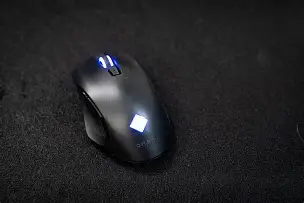
From day one I appreciated the Vector's shape. It has a slightly elongated hump and a tapered right side that suits a palm-to-claw hybrid grip — my hand is average size and I found it comfortable for long sessions. The textured side grippy material helps during sweaty matches; I noticed that it keeps a good grip without feeling abrasive. After months of use, the texture held up well with only minor shine forming on the highest-contact spots.
Build quality felt good overall. The primary buttons had a clean, clicky feel with little pre-travel, and the scroll wheel had distinct notches that made precise weapon switches easy. I did notice a subtle creak if I squeezed the shell near the blueprints of the internal seams — not a deal-breaker but something you notice if you're handling multiple mice back-to-back.
Performance and sensor
In my hands, the Vector Wireless delivered reliable tracking. I didn't experience any obvious acceleration or jitter across the kinds of surfaces I use. In fast flicks during FPS matches the cursor went where I expected, and the wireless latency was imperceptible when using the 2.4 GHz dongle. I switched to wired mode for a few matches and couldn't reliably tell a difference unless I deliberately tried to detect latency — which I think speaks well of the wireless implementation.
Across several firmware updates during my testing period, tracking consistency improved slightly. What I appreciated was that the company pushed small fixes that reduced a few rare micro-stutters I encountered in the first couple of weeks. After those updates, performance was stable and repeatable.
Battery life and daily use
Battery life was one of the Vector's strong suits in my experience. With RGB lighting enabled at a medium brightness, I comfortably got multiple days of heavy use (gaming evenings plus daytime productivity) before the battery drained to a low warning. Turning off or dimming RGB stretched that to a week of light use. Charging via USB-C is convenient — a short 15–20 minute top-up often gave me an hour or two of solid use when I was squeezing in gaming between chores.
I did notice that battery capacity gradually declined as I crossed the three-to-five-month mark, but that decline matched my expectations for any rechargeable device that's used daily. Nothing alarming, just the normal slow capacity fade that comes with many recharge cycles.
Find top-rated Electronics products at great prices.
View Offers →Software, customization, and ecosystem
I used HP's OMEN/Gaming Hub to customize DPI steps, button assignments, RGB zones, and create profiles. In my experience, the software provides deep options; I liked the ability to store multiple profiles onboard so I could switch machines without reloading software. That said, the software occasionally felt slow to launch and had a couple of moments where a settings change didn't stick until a restart. Those bugs were intermittent and thankfully fixed in later updates, but they were annoying at the time.
On the customization front I appreciated remapping options, sensible default DPI stages for easy switching, and a macro editor that does the job. The onboard memory is a practical inclusion that helped me keep consistent settings between home and a laptop I travel with.
Durability and long-term wear
After months of daily use, the Vector still looks and feels solid. The left and right switches show only minimal signs of wear; the PTFE feet glide smoothly and haven't peeled or frayed. One area I monitored was the USB-C port: frequent plugging and unplugging can be a weak point in many designs, but the Vector's port held firm with no wobble. The side button labels didn't rub off, and the RGB diffuser stayed even without dimming artifacts.
That said, if you are very rough with your gear — tossing bags, frequent road travel without a case — you might prefer a sturdier metal-reinforced frame that some competitors offer. For gentle-to-moderate travel the Vector held up fine for me.
What I liked most
- Comfortable shape that suits a range of grips; good for long daily use.
- Reliable 2.4 GHz wireless performance with no perceptible lag.
- Strong battery life that lasts multiple days for typical mixed use.
- Customizable with onboard memory so you can move between devices easily.
- Ongoing firmware updates improved performance and reduced micro-stutters.
What disappointed me
- Software can be flaky at times — occasional save failures and sluggish UI.
- Not the absolute lightest mouse — competitors can be noticeably lighter for esports-focused players.
- Minor creaks under firm grip pressure; not widespread, but noticeable if you handle many mice.
- RGB and features are useful but not as refined as the latest 2026 flagship releases.
Comparison: Omen Vector Wireless vs. Popular alternatives
| Model | Weight / Feel | Battery Life (real-world) | Shape / Grip | Best for | My take |
|---|---|---|---|---|---|
| Omen Vector Wireless | Moderately light; comfortable balance | Multiple days with RGB; longer with RGB off | Palm-to-claw hybrid; elongated hump | Users who want reliable wireless and comfort | Great all-rounder; small software annoyances |
| Logitech G Pro-type (popular flagship) | Very light; ultra-competition feel | Comparable or slightly better with optimized settings | Ambidextrous / esports-focused | Competitive FPS players wanting minimal weight | Best for pure esports, but pricier |
| Razer Viper-series | Light and agile | Good, varies with settings | Ambidextrous, flatter profile | Players who prefer ambidextrous designs | Solid performance and software, similar trade-offs |
| Glorious Model O Wireless | Ultra-light honeycomb (if you like the look) | Excellent when optimized | Low-profile, fits claw/palm | Those prioritizing lowest weight | Extremely light, but different build philosophy |
Who is the Omen Vector Wireless best for?
In my experience, the Vector shines for folks who want a dependable wireless mouse that is comfortable across long sessions and flexible for both gaming and productivity. If you prioritize comfort and a stable wireless connection over the absolute lightest possible weight, the Vector is a strong choice.
If you're a tournament-level competitive player who chases every gram of weight savings and the very smallest latency window, there are lighter and more esports-focused mice available in 2026. Conversely, if you want a budget wired mouse, there are cheaper options with similar sensors but without the wireless convenience.
Buying guide: what to consider before you buy
Grip and ergonomics
I've learned over months that a mouse that feels great in the first session might still cause fatigue after several hours. Try to test the Vector (or a similar-shaped mouse) if you can. Look for a shape that supports your preferred grip — palm, claw, or fingertip — and pay attention to thumb-rest placement and side button reach.
Weight and playstyle
Decide whether you prefer an ultra-light mouse for fast flicks or a balanced heavier feel for control. I found the Vector strikes a good middle ground; if you want lighter, look at dedicated esports models instead.
Find top-rated Electronics products at great prices.
See Deals →Wireless implementation
Check whether the mouse supports a low-latency 2.4 GHz dongle, Bluetooth, or both. In my testing, the Vector's dongle was dependable and consistent. If you plan to use your mouse on multiple devices, onboard profile storage and a reliable Bluetooth mode matter.
Battery life and charging
Think about how long you want to go between charges and whether the mouse charges via a modern USB-C connector. I appreciated the Vector's USB-C charging and quick top-ups that gave me enough runtime between heavy gaming sessions.
Software and updates
Software can make or break the experience. In my case, the Vector's app gave me a lot of control but had occasional hiccups early on; check the manufacturer’s update cadence and read recent user feedback to ensure active support.
Durability
Look for solid switch quality, durable feet, and a reinforced charging port if you travel often. After months, I found the Vector's components held up well under normal use.
Final thoughts and conclusion
After months of using the Omen Vector Wireless, I feel comfortable recommending it as a strong mid-to-high tier wireless mouse in 2026. In my experience, its balance of comfort, dependable wireless performance, good battery life, and on-board customization make it a practical daily driver. I was pleasantly surprised by the steady firmware updates that fixed early issues and by how well the mouse held up physically.
That said, if you want the absolute lightest competitive mouse or flawless, lightning-fast software, there are other options that may fit those specific priorities better. For the majority of users — gamers who also use their machine for work, streamers who need reliability, or anyone who wants a comfortable wireless mouse without paying flagship premiums — the Vector still makes a lot of sense in 2026.
In my experience, the Omen Vector Wireless isn't perfect, but it's a dependable and pleasantly versatile choice that will suit most people who want a high-quality wireless mouse without chasing top-tier esports extremes. After testing and living with it day-to-day, I can say I reached for it more than once when I wanted a comfortable, trouble-free session — and that's the highest compliment I can give any peripheral I've used for months.