Spec Battle: Once Upon Photo Book vs Fujifilm X T30 III — Is It Worth Upgrading?
The world of photography is often divided into two distinct phases: the capture and the preservation. For years, the Fujifilm X-T30 series has stood as a benchmark for enthusiasts who want to capture high-quality, soulful images without the bulk of a professional DSLR. With the release of the Fujifilm X-T30 III, the conversation around technical progression has reached a fever pitch. However, a parallel trend has emerged in the digital age—a realization that thousands of photos sitting on a memory card or a cloud server provide little emotional value. This has brought services like Once Upon Photo Book into the spotlight, offering a modern, streamlined way to bring those digital captures into the physical world. While one is a sophisticated piece of imaging hardware and the other is a premium archival service, they represent two different "upgrades" a photographer can make to their workflow.
Deciding whether to invest in the latest camera body like the X-T30 III or to allocate those resources toward high-end physical preservation like Once Upon Photo Book requires a deep dive into what actually improves the photographic experience. Is a faster autofocus system more valuable than a curated coffee table book of your family’s last decade? This article explores the specifications, the utility, and the long-term value of both, helping you decide where your next "upgrade" should really happen.
The Evolution of the Mid-Range Master: Fujifilm X-T30 III Review
The Fujifilm X-T30 III arrives as a refined successor to one of the most beloved mirrorless cameras on the market. Historically, the X-T30 line has been dubbed the "Little Giant," as it inherits the sensor and processor of the flagship X-T series but houses them in a more compact, travel-friendly body. The Mark III iteration continues this tradition, pushing the boundaries of what a sub-1,000-dollar camera can achieve. It is designed for the hybrid creator—someone who demands exceptional still-life performance and cinematic video capabilities in a portable form factor.
At the heart of the X-T30 III is the updated X-Trans CMOS sensor, which brings a significant jump in resolution and dynamic range from its predecessor. Fujifilm has also integrated the latest X-Processor, which facilitates faster readout speeds and a more sophisticated subject-detection autofocus system. Powered by deep-learning AI, the camera can now track not just human faces and eyes, but also animals, birds, automobiles, and even bicycles. This makes the X-T30 III a formidable tool for street photographers and parents alike, ensuring that fleeting moments are captured with clinical precision.
Handling and ergonomics remain a high point. The X-T30 III retains the tactile, analog-style dials for shutter speed and exposure compensation that Fujifilm fans adore. This manual control encourages a more deliberate approach to photography, making the process of shooting as enjoyable as the final result. The body is lightweight enough for all-day carry, yet it feels robust in the hand. The inclusion of the latest Film Simulations, including nostalgic favorites like Reala Ace and Classic Negative, allows photographers to achieve a finished "look" straight out of the camera, significantly reducing the time spent in post-processing software.
The Art of Tangible Memories: Once Upon Photo Book Analysis
On the other side of the photographic spectrum is Once Upon, an app-based service that has revolutionized how we think about photo albums. In an era where "upgrading" usually means more megapixels or faster frame rates, Once Upon argues that the ultimate upgrade is visibility. Their service focuses on ease of use, design minimalism, and high-quality Scandinavian aesthetics. It is built for the photographer who has thousands of images but no physical record of their life’s most important events.
The Once Upon experience is defined by its mobile-first workflow. While traditional photo book software can be cumbersome and time-consuming, Once Upon uses a smart layout engine that automatically arranges photos based on the time they were taken and their visual composition. This removes the "decision fatigue" that often prevents people from finishing a book project. The hardware here isn't a lens or a sensor, but the German-made paper and the precision binding that ensure the book feels like a premium object rather than a cheap giveaway.
Using Once Upon is an upgrade in storytelling. While the Fujifilm X-T30 III captures the data, Once Upon provides the narrative structure. The books are available in various formats—softcover, hardcover, and clothbound—utilizing semi-matte or silk finish papers that are designed to resist fingerprints and age gracefully. For many, the true value of a camera is the legacy it leaves behind, and in that regard, a high-quality photo book is the necessary conclusion to the photographic cycle.
Discover deals on Cameras & Photography — updated daily.
See Deals →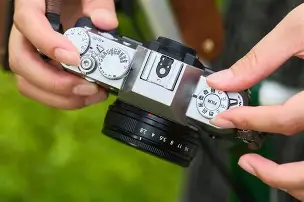
Pros and Cons
Fujifilm X-T30 III
- Superior 26.1MP or higher X-Trans sensor provides incredible detail and low-light performance.
- AI-driven subject tracking autofocus ensures you never miss a sharp shot of moving subjects.
- Physical control dials offer a tactile, immersive shooting experience that modern touchscreens can't replicate.
- Extensive library of high-quality X-mount lenses allows for specialized creative growth.
- Compact, lightweight design makes it the perfect companion for travel and daily life.
- Cons: Lacks internal body image stabilization (IBIS) found in more expensive models.
- Cons: The small grip can be uncomfortable when paired with larger, professional-grade lenses.
Once Upon Photo Book
- Mobile-app workflow allows you to design and order a book during a commute or while relaxing on the sofa.
- Clean, minimalist Scandinavian design ensures the photos remain the star of the show.
- High-quality printing and binding materials offer a professional, archival-grade finished product.
- Collaborative features allow multiple family members to contribute photos to a single book project.
- The automatic layout engine significantly reduces the time required to create a 100-page book.
- Cons: Limited customization options for those who want total control over every font and pixel placement.
- Cons: High-end clothbound editions can become expensive when ordering multiple copies.
The Comparison: Technical Capture vs. Physical Output
To understand if the upgrade is worth it, we must compare what these two products offer to the photographer's lifecycle. One enhances the quality of the raw material, while the other enhances the quality of the final presentation.

| Feature/Variable | Fujifilm X-T30 III | Once Upon Photo Book |
|---|---|---|
| Primary Goal | High-fidelity image and video capture | Physical archival and storytelling |
| Core Technology | X-Trans Sensor / X-Processor | Smart Layout Engine / Mobile App |
| User Input | High; requires knowledge of exposure and focus | Low; focuses on selection and curation |
| Portability | Pocketable with pancake lenses | Digital design; physical result is a book |
| Output Format | RAW/JPEG/4K Video | Hardcover/Softcover/Clothbound Books |
| Longevity | 5-10 years (until tech becomes obsolete) | 50+ years (archival paper and ink) |
| Investment Type | Hardware / Tool | Service / Legacy |
Buying Guide: Determining Your Upgrade Path
Choosing between a new camera body and an investment in physical printing depends entirely on where your bottleneck lies. Ask yourself: "What is preventing me from enjoying my photography more?"
Scenario A: You have a library of great photos but never look at them.
In this case, upgrading to the Fujifilm X-T30 III might not be the answer. If you are already shooting on a decent smartphone or an older mirrorless camera, your "quality of capture" is likely sufficient. Your bottleneck is "visibility." Upgrading to a service like Once Upon Photo Book will yield a much higher emotional return on investment. Seeing your images printed on high-quality paper in a library-worthy binding creates a connection to your work that no new sensor can provide. For the price of a mid-range lens, you could create a multi-volume library of your life's work.
Scenario B: You are struggling to capture your vision due to technical limits.
If you find that your current gear is missing focus on your children, struggling in low-light indoor settings, or failing to capture the dynamic range of a sunset, then the Fujifilm X-T30 III is the definitive upgrade. The advancements in AI autofocus and sensor technology in the Mark III are objectively superior to older models. This camera will allow you to capture the "raw material" that is actually worth printing later. It is a tool that removes the frustration of technical failure, allowing the creative process to flow more naturally.
Scenario C: You want to build a sustainable photographic hobby.
For a holistic hobby, the best upgrade might be a combination. Perhaps instead of buying the most expensive lens for the X-T30 III, you opt for a versatile prime lens and use the savings to start a "Book of the Month" habit with Once Upon. This ensures that every month of shooting results in a physical artifact. This "shoot-to-print" workflow is what many professional photographers use to stay motivated and organized.
Real-World Use Cases
Consider the travel photographer. On a two-week trip to Japan, an X-T30 III is an incredible asset. Its small size means it’s always in your hand, not in your bag. The Film Simulations allow you to capture the vibrant neon of Tokyo or the muted tones of a Kyoto temple with perfect color science. But once you return home, those 2,000 images are just data. This is where Once Upon completes the journey. By using the app to select the best 50 shots while you are still on the flight home, you transition the "capture" into a "story" before the memory fades. The upgrade here is the marriage of the two: the Fuji for the quality, and the Once Upon for the memory.
For the family historian, the stakes are different. Children grow up in the blink of an eye. The X-T30 III's face and eye detection is a literal lifesaver, ensuring that every milestone is sharp. However, if those sharp photos are buried in a digital cloud, they are effectively lost to the next generation. A Once Upon book serves as a tactile legacy. When a child flips through a physical book, they engage with the images in a way they never do on a tablet screen. The upgrade is about moving from "taking photos" to "making history."
Detailed Feature Analysis: What Makes the X-T30 III Special?
To truly justify the upgrade to the X-T30 III, one must look at the specific technical improvements over older models or even higher-end smartphones. The most significant jump is the "processing power to size ratio." Many compact cameras sacrifice speed to maintain their small footprint, but the X-T30 III uses the same brain as the professional X-T5. This means the time between pressing the shutter and the camera being ready for the next shot is virtually non-existent. For street photography, where the "decisive moment" lasts only a fraction of a second, this speed is the difference between a masterpiece and a blurry miss.
Find top-rated Cameras & Photography products at great prices.
View Offers →Furthermore, the video capabilities of the X-T30 III have been significantly overhauled. It now supports 10-bit internal recording and F-Log, features that were once reserved for high-end cinema cameras. If you find yourself wanting to capture high-quality home movies or content for social media, the X-T30 III offers a depth and "film-look" that is impossible to emulate with software alone. The physical presence of a dedicated microphone jack and improved heat management make it a reliable tool for longer recording sessions.
Detailed Feature Analysis: Why Once Upon Leads the Market
Many photo book services exist, but Once Upon has identified a specific niche: the "busy quality-seeker." Traditional services like Blurb or Shutterfly offer massive customization, which can lead to "blank page syndrome." Once Upon’s upgrade is in its constraints. By limiting layouts to clean, pre-defined grids, they ensure that the book always looks professional. You cannot accidentally place a photo in a way that looks cluttered or amateurish.
The paper quality is another area of a hidden upgrade. Most budget photo books use thin, glossy paper that reflects light and makes the images hard to view. Once Upon utilizes a heavier stock with a specific texture that absorbs light, making the colors appear deeper and more saturated—similar to a gallery print. The binding is done with a "lay-flat" mentality in mind, meaning you can see the images near the spine without having to force the book open and risk cracking the glue. This attention to detail transforms a collection of photos into a genuine piece of home decor.
Conclusion
Is it worth upgrading? The answer depends on your current stage in the photographic journey. The Fujifilm X-T30 III is a masterpiece of technical engineering, offering a bridge between casual snapping and professional artistry. It is an upgrade of capability—giving you the power to capture light in ways you couldn't before. It is for the person who feels limited by their current gear and wants to experience the joy of a dedicated, high-performance camera.
However, Once Upon Photo Book offers an upgrade of purpose. It solves the problem of "digital hoarding" by forcing a curation of your best moments into a beautiful, permanent form. It is for the person who already has enough gear but lacks a way to share and enjoy the fruits of their labor. In a world increasingly obsessed with the "spec battle" of cameras, the ultimate upgrade might just be the one that takes your photos off the screen and puts them into your hands.
Ultimately, a camera like the Fujifilm X-T30 III is only as good as the memories it preserves. If you can afford to enhance both your capture and your output, you will find a more fulfilling and sustainable hobby. But if you must choose, choose the upgrade that addresses your biggest frustration: if it’s "I can't get the shot," get the Fuji. If it’s "I never see my shots," get the Once Upon Photo Book. Both represent a commitment to the art of photography, ensuring that your most precious moments are never forgotten.